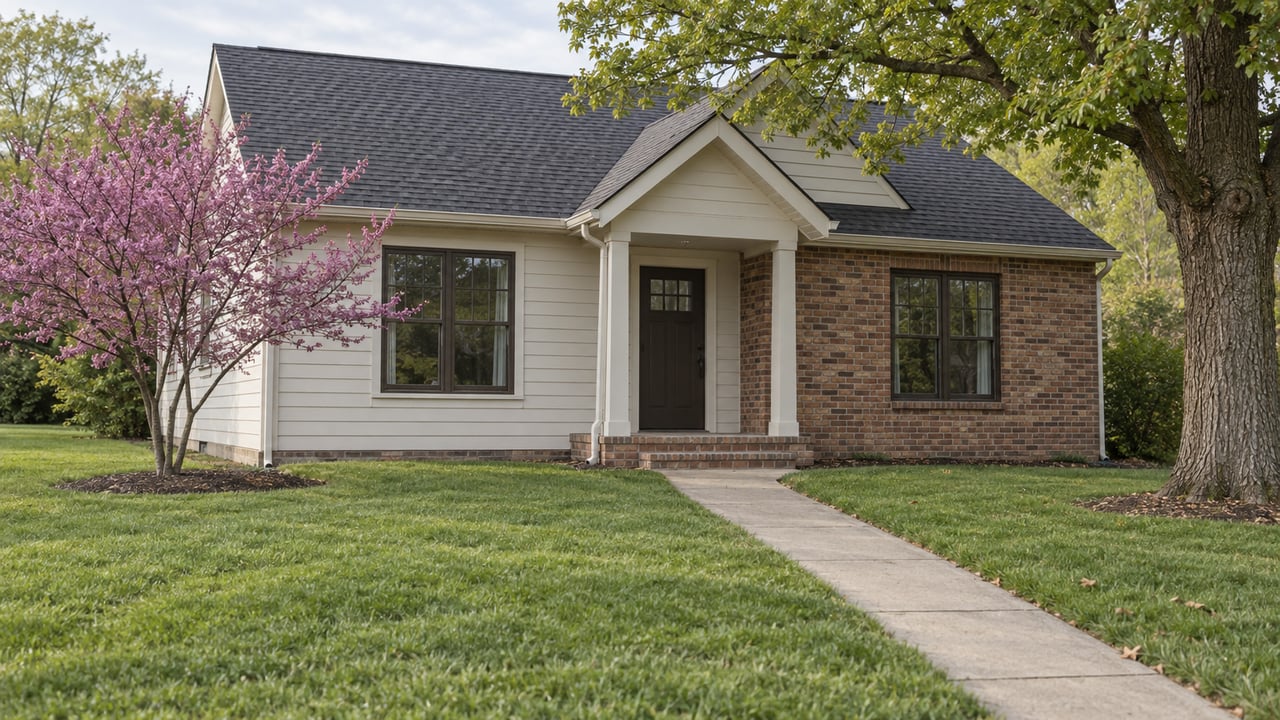
In June 2026, the Franklin Historic Zoning Commission approved a window replacement at 108 Cottage Lane, a Vandalia Cottages property inside the Boyd Mill Avenue Historic District. The vote was unanimous. The applicant walked in, presented vinyl-clad windows appropriate to the subdivision, and walked out with approval the same meeting.
A month later, at 335 Main Street, the same commission denied a storefront alteration and a set of shutters on the same agenda. The reason given for the shutters: lack of historic evidence. Not the wrong material. Not too expensive. The applicant simply hadn't shown the commission proof that shutters belonged on that facade in the first place.
Same city. Same nine-member board. Same season. Two renovation requests that, on paper, sound similarly modest. One sailed through. One didn't.
If you're looking at a home inside one of Franklin's historic districts, that gap is the thing worth understanding before you write an offer. It's not really about how invasive your project is. It's about whether you show up with the documentation the commission needs to say yes.
Franklin Doesn't Have One Historic District. It Has Seven, and They Aren't the Same Size
The phrase "historic district" gets used as if it describes a single set of expectations. It doesn't. Franklin has seven locally designated historic districts, and they range enormously in scale, from the five-parcel Everbright Avenue Historic District to the Franklin Road Historic District, which stretches just under two miles north of downtown. Each one carries legal enforcement through its own adopted ordinance, which means the rules apply whether or not a buyer realizes which district they've landed in.
That distinction matters more than it sounds. A five-parcel district has a tight, specific architectural character the commission can reference quickly. A two-mile corridor covers a wider range of building types and eras, which can mean more room for interpretation on any given request, but also more variables the commission weighs before signing off. Buying "in a historic district" without knowing which one tells you almost nothing about what your renovation will actually require.
What Actually Triggers a Commission Review
Inside Franklin's Historic Preservation Overlay, most visible exterior work needs a Certificate of Appropriateness before it can proceed. That includes:
- Additions, new construction, and demolition
- Window and door replacement visible from the street
- Roof material and roofline changes
- Driveway and walkway material changes
- Fences, site walls, and landscape features that affect the streetscape
- Signage and awnings on commercial storefronts
Not every one of those goes in front of the full nine-member commission, though. Franklin's process splits into two tracks, and knowing which one your project falls into changes your timeline by weeks.
| Administrative COA | Full HZC Review | |
|---|---|---|
| Who decides | Preservation Planner | Nine-member Historic Zoning Commission |
| Typical scope | Minor alterations, often on rear or obscured facades, that don't substantially change the exterior | Additions, new construction, demolition, front-facing material changes |
| Meeting cadence | No monthly meeting required | HZC meets monthly |
| Typical example | Sandwich board signage, in-kind rear deck replacement | Window replacement at 108 Cottage Lane, storefront work at 335 Main Street |
The administrative path can move in days. The full review path is tied to a monthly meeting calendar, and that single fact does more to determine your renovation timeline than almost anything else in the process.
The Ordinance Underneath All of This Just Changed
Franklin adopted an entirely new Zoning Ordinance, effective January 13, 2026, under Ordinance 2025-25. It's a full rewrite, not an amendment, and it restructured how historic resources are governed alongside the rest of the city's development code. The ordinance carries transitional rules that matter if you're buying a property with any renovation history already in motion: approved development plans, site plans, variances, and Certificates of Appropriateness that were valid on the effective date remain valid until their expiration, but any application submitted from January 1, 2026 forward has to comply with the new ordinance.
Practically, that means if a seller tells you a previous COA is "already approved," you'll want to know exactly when it was issued and what its expiration terms are. An approval issued under the old code doesn't disappear, but a fresh request for additional work on that same property now runs through the new framework, not the one the seller may be thinking of.
Why Nearly Identical Requests Get Different Verdicts
Go back to the June and July 2026 case files and a pattern shows up that has nothing to do with how big the project was.
At 900 Fair Street, inside the Hinchville National Register Historic District, the commission approved replacing an asphalt driveway with broom-finish concrete. Staff found the alteration aligned with the guidelines, and the vote was unanimous.
At 251 2nd Avenue South, the Old Ice House project involved partial demolition, alterations, and an addition, arguably one of the more invasive requests on any 2026 agenda. It was approved anyway, with conditions. The commission removed a staff prohibition against cutting a new opening in the existing brick, but only after requiring documentation and in-kind replacement standards.
Compare that to 109 Everbright Avenue, where a homeowner's larger accessory structure was deferred and effectively denied, not because the commission objected to its design, but because it exceeded the city's 50 percent lot footprint rule. A smaller accessory structure, a pool, and a driveway on the same property were approved without issue.
The reason given for the shutter denial at 335 Main Street was lack of historic evidence.
That phrase is the throughline. The commission isn't asking whether your project is tasteful. It's asking whether you can show that what you're proposing belongs on that specific building, in that specific district, based on documented precedent. The Old Ice House team came prepared with a plan for in-kind replacement and documentation. The Cottage Lane applicant proposed windows appropriate to a subdivision the commission already understood. The shutters at 335 Main Street didn't have that backing, and the footprint math at Everbright Avenue wasn't a design question at all. It was zoning arithmetic that no amount of documentation could fix.
What This Means for Your Timeline and Your Offer
Because full HZC review is tied to a monthly meeting schedule, a straightforward exterior project realistically runs 60 to 90 days from first submission to final approval, longer if your first application comes back with conditions or gets returned for more documentation. That's not a worst-case estimate. It's the ordinary cycle time when a project needs a second pass.
Before you write an offer on a home inside any of Franklin's seven historic districts, a few questions are worth answering up front:
- Which specific historic district is this address in, and how large is it? A five-parcel district and a two-mile corridor don't carry the same design context.
- Does the property have any COA history, approved, denied, or pending, and when was it filed relative to the January 2026 ordinance change?
- Is the renovation you're planning likely to qualify for administrative review, or will it need a spot on the monthly HZC agenda?
- If your project involves anything beyond cosmetic work, do you have or can you gather the documentation, photographs, architectural period references, comparable district examples, that the commission has shown it wants to see?
None of this should scare a buyer away from a historic Franklin property. It should change how you plan the first ninety days after closing.
Frequently Asked Questions
Is a locally designated historic district the same as being listed on the National Register of Historic Places? No. National Register listing recognizes a property's historical or architectural significance but places no restrictions on how a private owner uses, alters, or sells it. Franklin's locally designated districts, adopted by ordinance through the Board of Mayor and Aldermen, are the ones that carry legal enforcement and require Certificate of Appropriateness review.
If I buy a home with a previously approved COA, does that approval transfer to me? Based on the new ordinance's transitional rules, approved Certificates of Appropriateness that were valid on the January 13, 2026 effective date remain valid until their stated expiration. That approval generally stays with the property, not the seller, but any new work beyond what was approved has to go through fresh review under the current ordinance.
How do I find out which of the seven historic districts a specific address falls into? Franklin's Planning and Sustainability Department maintains historic preservation staff who can confirm district boundaries and pull any existing COA history for a specific parcel. It's worth doing this before you finalize renovation plans, not after.
Does every exterior change need to go in front of the full commission? No. Minor alterations that don't substantially change a property's exterior appearance, especially on rear or obscured facades, can often be approved administratively by the Preservation Planner without waiting for a monthly HZC meeting.
If you're weighing a historic Franklin property against a newer build, the renovation math is genuinely different, not harder, just different, and it's worth walking through before you're under contract rather than after. Robert Young works this market from Franklin's historic core out to Williamson County's newer suburbs and can help you read what a specific address actually requires. Schedule your free market consultation to talk through the property you're considering.